

Anna’s Hummingbird // Photo by Dave Hage
We invite you to join us for an experiential dive into the practices of Bird Language and Mindful Birding! Over the course of 4 weeks from May 16th to June 11th we will be focusing on slowing down and relaxing your nervous system through tuning into the birds, while also building a relationship of reciprocity with them. By paying attention to birds’ vocalizations and behaviors, and striving to understand what they are communicating about in our neighborhoods, we also come to learn how our choices, actions and behaviors can support their well-being.
Mindful Birding and Bird Language share a lot of overlap and complementary elements in their practices and pedagogies. Here is a bit more about each of these approaches to connecting with the birds and with ourselves:
The practices of mindful birding are designed to help you slow down and settle your nervous system by tuning into our senses, and to the birds. By bringing ourselves to the present moment through mindfulness techniques we can experience rejuvenation, restoration, and improved states of mental and physical health. Mindful birding dovetails perfectly with the awareness and presence needed to learn the language of the birds.
“Mindful birding is the intentional practice of mindfulness in communion with birds. The birds offer us the gift of joining them, allowing their presence to guide us to the present moment. In mindfulness we are not worried about the past or worried about the future, and as such it creates a sense of grounding, spiritual connection, and wholeness. It is an opportunity to go within and feel more connected to the more-than-human world.” ~Tammah Watts
Through sound, silence, gesture, posture, and behavior, birds communicate about what they are observing. They are telling the story of the ecosystem in real time.
Birds are paying such acute attention to everything happening in the earthscape because their survival depends on it! They communicate to announce food sources, attract a mate, announce home, coordinate within a flock, sound the alarm when danger appears and signal when settling has returned. They are also communicating about us and our impact on the environments around us!
Many members of the ecosystem, including animals outside of the bird family, are attuned to this wild language. As fellow animals, we can learn to understand this language too, increasing our “wild fluency,” a term coined by Weaving Earth’s Executive Director Lauren Dalberth Hage. Wild Fluency invites us into the practice of communication with the earth’s languages. Wild fluency helps us to engage and occupy our senses and tune into our bodies’ somatic brilliance.
Weaving Earth approaches bird language through both a co-liberatory lens and somatic orientation, as the practices can help settle our nervous systems, create empathy and connection across difference, offer insight into our internal and collective rhythms, and be applied to community leadership and communal relationships.
“Paying attention to the language of the birds expands awareness of the interrelated ecology that we are a part of, helping us to remember ourselves as a part of that ecosystem It deepens intimacy with the birds in our home places, builds an understanding of common interspecies communication patterns, and offers insight into how we move through the world.” ~Lauren D. Hage
Research shows that spending 20 minutes outdoors can boost our health and calm our minds.
~Harvard Health Publishing
This program is designed to be accessible from your homeplace and to bring you into deeper relationship with your bioregion. We will meet via zoom twice per week for four weeks on Thursdays and Tuesdays. Thursdays’ calls are 1.5 hours and will include both educational and experiential elements. Tuesdays’ calls are 1 hour in length and are fully experiential, with the option to participate inside and outdoors. To increase accessibility we are providing two options to join on Tuesdays — one in the morning and one in the afternoon/evening. Participants are invited to choose one, or join both if they would like. All calls will be recorded so you can enjoy live or on demand.
SCHEDULE:
WEEK 1: Thursday May 16th, 12-1:30pm PST — Birding and the Body: We will introduce the mindful birding practice and how it benefits our physical and mental health. In a 30-minute guided meditation, we will establish the foundation for grounding and opening our senses to the birds. We will circle up as a community to share our stories and observations from the experience.
Tuesday May 21st, 7-8am PST and/or 4:30-5:30pm PST — Practice Session: We will practice mindful birding with a focus on connecting to our bodies, mindful movement, gently activating our senses, and building awareness of the birds.
WEEK 2: Thursday May 23rd, 12-1:30pm PST — Joining the Conversation: How can we offer our attention to the world in increasingly nuanced ways? What aspects of bird life and behavior help us learn their language? In this session we will focus our attention on the recognizable patterns of bird language and begin to notice how we are already a part of the conversation.
Tuesday May 28th, 7-8am PST and/or 4:30-5:30pm PST — Practice Session: We will practice mindful birding with a focus on connecting to our bodies, activating our senses, and bringing our attention to the language of the birds.
WEEK 3: Thursday May 30th, 12-1:30pm PST — Taking it Deeper: Building on the practices from previous weeks, we will shift our focus to the more subtle patterns and shapes of bird language to help us understand the stories they tell about the landscape and our lives personally.
Tuesday June 4th, 7-8am PST and/or 4:30-5:30pm PST — Practice Session: We will practice mindful birding with a focus on connecting to our bodies, activating our senses, and bringing our attention to the nuanced language of the birds.
WEEK 4: Thursday June 6th, 12-1:30pm PT — Reflections and the Path Ahead: We will reflect on what we have discovered about the birds and ourselves through the practice. We will blend core learnings from mindful birding and bird language. To continue the practice beyond the program, we will share upcoming opportunities for mindful birding and bird language at home and in the community.
Tuesday June 11th, 7-8am PST and/or 4:30-5:30pm PST — Final Practice Session: We will practice mindful birding and bird language with a focus on preparing participants for an ongoing practice and sharing gratitude for our experiences with the birds and in the community.

Spending just 20 minutes connecting with nature can help lower stress hormone levels.
~Frontiers in Psychology
We intend to interrupt ongoing systems of inequity and the resulting lack of access to programs and education for marginalized identities by providing access to this program through three entry points:
the Lifeways Back Access Fund is for Black, Indigenous and People of Color (BIPOC). we hold a prayer for the manifestation of the full expression of what reparations and land back can and will mean in this world. knowing that this full expression is not yet here, we highlight one aspect of that larger prayer: the return of Lifeways. we lean on the articulation of our kin and co-collaborator, Pınar Sinopoulos-Lloyd, who reminds us that many of the so-called ‘skills’ taught in the fields of nature connection and ancestral arts are,
“…not skills — these are Lifeways — indigenous, multi-species pedagogy for time immemorial. We have the right to access and reclaim our Lifeways.”
There is a difference between accessing the Lifeways Back Fund and General Access Fund. the “sliding scale” for Lifeways Back begins at $0, and does not need to go any higher* — however, it includes the possibility of offering a gift of any size, should you so choose. anything you do choose to offer will go directly toward the Lifeways Back Access Fund to support other BIPOC participants in joining. This is not a scholarship fund, and we do not assume that individual BIPOC applicants do not have access to wealth — these funds are offered with a prayer for collective liberation.
*NOTE: We are actively fundraising for the Lifeways Back Fund and if you, or someone you know might be interested in supporting, you can donate to the Lifeways Back Fund here. All proceeds will go directly towards supporting BIPOC participants accepted into the program to attend WE programming without charge.
The General Access Fund is for those from other marginalized groups, for those in need, for those seeking respite from the pressures of supremacy culture. If financial assistance would be supportive for you in joining this program, check the corresponding box in the tuition section of the application. We cannot guarantee that scholarships will be available to all who apply for them and are accepted to the program, but we are dedicated as a team to rigorous outreach, our community, and the sliding scale model to support our efforts for practicing equity. Once we have a sense of the need we will do our best to accommodate the requests we receive.
As you engage in the practices of mindful birding and bird language, you may begin to notice:
This program is designed to be accessible from your homeplace and to bring you into deeper relationship with your bioregion. Through 4 weekly educational webinars and 8 guided practice sessions from May 16- June 11, 2024, we will gather via zoom to hear from course facilitators about key aspects of mindful birding and bird language, and to swap stories with other participants about what is happening in your neighborhoods. All webinars will be recorded so you can enjoy live or on demand.
This webinar series is perfect for both beginners and long-time bird lovers. It is a space where all identities are welcome — we strive to make all WE programming inviting and accessible regardless of your background. Participation is possible from indoors or outdoors — you simply need a place where you can sit, stand, or lie down by a window, balcony, yard, or local park.
Space is limited. Register today for the Mindful Birding and Bird Language Series.
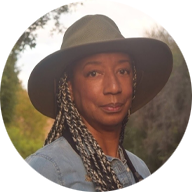
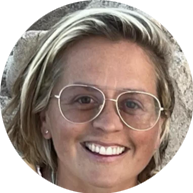
In this short video Tammah Watts and Molly Tsongas, two of the facilitators for the program, speak about the concept of mindful birding and how it relates to bird language.
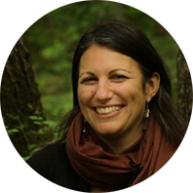
In this short video Lauren and David Hage, two of the facilitators for the program, speak about the practice of Bird Language and how it relates to Mindful Birding.
Not only can we come to understand the language of the birds, we can have a LOT of fun doing it!